
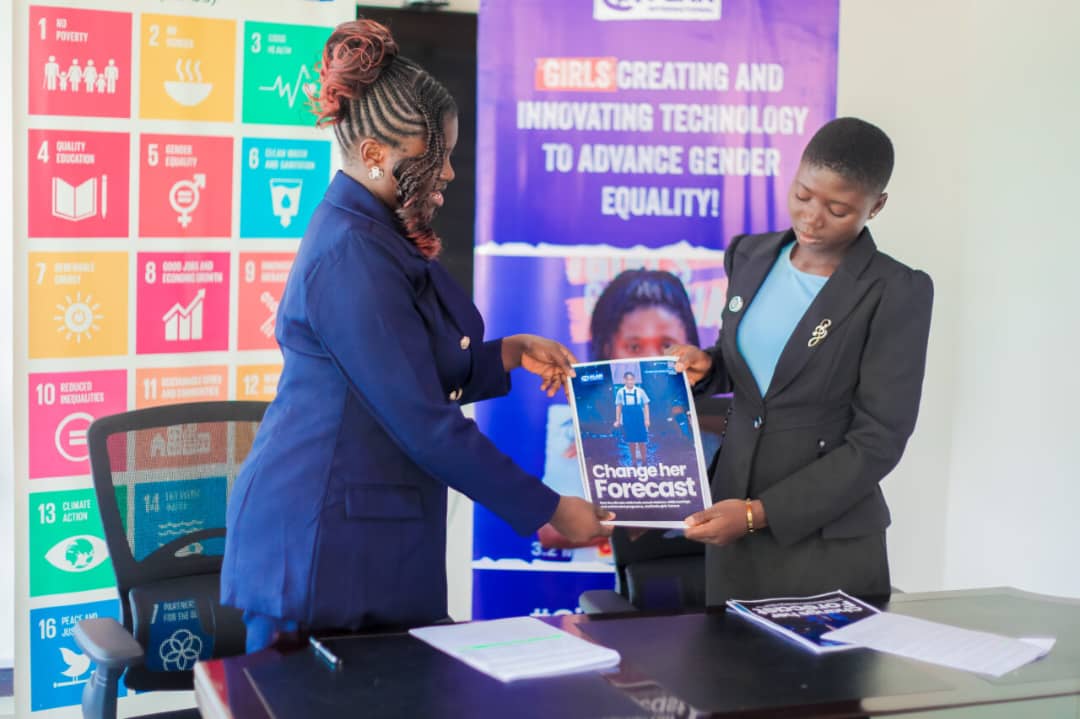
Two Ghanaian girls have assumed leadership roles at UNICEF Ghana and Plan International Ghana, calling for increased investment in girls’ education, healthcare and protection.
The girls, 21-year-old youth activist Juliet Dede Gberbi and 14-year-old Priscilla Amoadzah, a pupil of Tafi Mador D/A Junior High School, respectively took over as Officer-in-Charge (OIC) of UNICEF Ghana and Country Director of Plan International Ghana on October 13, 2026.
The initiative, known as the Girls’ Takeover, formed part of activities to mark the International Day of the Girl Child and aimed to promote girls’ participation in leadership and decision-making.
During their time in office, the girls participated in strategic meetings, engaged with programme heads and presented recommendations on issues affecting girls, including child marriage, access to education and protection during emergencies.
The UNICEF Ghana Officer-in-Charge, Ms Anne Kariuki, said the initiative should lead to practical measures to address the inequalities girls faced.
“Giving girls the opportunity to take over executive roles is not just an exercise in inspiration; it is a clear demand for radical social change. We need targeted investments to address the inequalities that girls face daily, from teenage pregnancy to limited access to leadership spaces as well as early and forced marriage,” she said.
At Plan International Ghana, Priscilla was joined by eight other children who symbolically assumed the roles of members of the organisation’s country leadership team.
They participated in discussions on ending child marriage and improving girls’ access to education, healthcare and protection services.
The children called for greater recognition of their role in development, saying they should be involved in identifying challenges and developing solutions to issues affecting their lives.
The Plan International Ghana Country Director, Ms Muniratu Issifu, said ending child marriage required sustained investment in girls’ development and efforts to address harmful social practices.
“Child marriage robs girls of their childhood, limits their opportunities and threatens their right to determine their own futures. Ending this harmful practice requires more than laws and public declarations; it demands sustained investment in girls’ education, protection, health and economic empowerment, alongside deliberate efforts to challenge the social norms that perpetuate it,” she said.
At a joint press briefing, both girls presented five recommendations drawn from Plan International’s 2026 State of the World’s Girls Report to address challenges affecting girls’ education, health, safety and participation in decision-making.
The recommendations included keeping every girl in school, ensuring continuity of education during emergencies, investing in girls’ health, providing essential services during disasters and including girls in decisions on climate change and development.
The girls called for alternative learning arrangements during floods, droughts and other climate-related emergencies to ensure that disruptions did not deprive girls of their right to education.