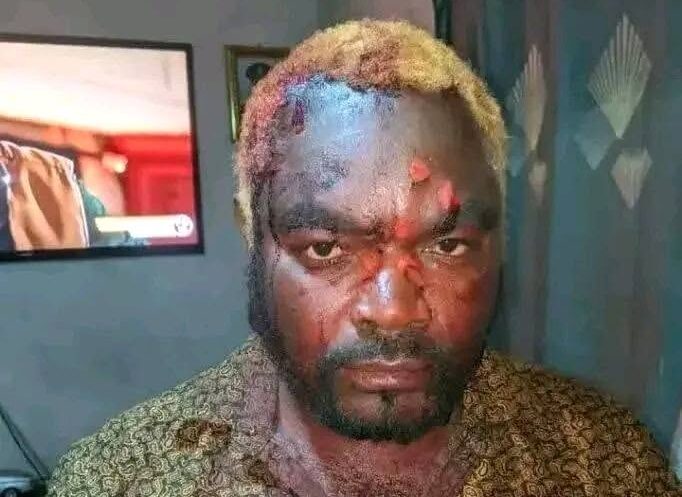
Musician Clifford Dimba, popularly known as General Kanene, remains admitted at the University Teaching Hospital after suspected ruling party cadres attacked him with a machete during a campaign rally in Shibuyunji District on Monday, one of several violent incidents that have rattled Zambia’s election campaign with polling day approaching.
The musician was performing at a rally for independent parliamentary aspirant Ibrahim Mwamba in Mwembeshi East Constituency when armed men arrived in a Toyota Land Cruiser and disrupted the gathering. Police spokesperson Godfrey Chilabi said preliminary investigations showed the attackers assaulted Dimba, inflicting a cut to his head, before turning on property at the scene.
“They allegedly assaulted Dimba, inflicting a cut to his head and damaged a Mitsubishi Triton registration number BAZ 5004 belonging to Mwamba,” Chilabi said. He added that the assailants also made off with an HP ProBook laptop, two mobile phones and sixteen thousand kwacha in cash, the value of the remaining damaged property still being assessed.
Dimba was first taken to Chawama Level I Hospital before being issued a medical report at Westwood Police Station and later referred to the University Teaching Hospital, where he remains under treatment. Police dismissed circulating social media rumours that the musician had died, and confirmed that a machete recovered at the scene had been retained as an exhibit.
Chilabi said dockets have been opened for aggravated robbery, unlawful wounding and malicious damage to property. “This matter is being treated as a serious criminal offence, and all those involved will be identified, arrested and prosecuted in accordance with the laws of Zambia,” he said. The rally had also been addressed by independent council chairperson candidate Mutumba Denise.
Mwamba’s own campaign team was not spared. According to reports carried in the aftermath of the attack, the aspiring MP suffered a fractured knee and ankle during the same disturbance, while campaign equipment including public address systems was stolen or destroyed.
The Shibuyunji attack came in the same week that supporters of the United Party for National Development and the National Reconciliation Party for Unity and Prosperity clashed in Luampa District, Western Province. Suspected UPND supporters attempted to block the campaign convoy of NRPUP presidential candidate Brian Mundubile, resulting in stone-throwing between the two groups before the confrontation was brought under control.
President Hakainde Hichilema condemned both incidents in a statement posted on his Facebook page, warning that political violence would not be tolerated regardless of who was responsible. “Let it be clear that violence, intimidation or lawlessness by any political party, candidate or supporter will not be tolerated,” the Head of State said, describing the reports as deeply concerning and deserving the strongest condemnation.
The President stressed that every political party had a lawful right to campaign during the period allocated by the Electoral Commission of Zambia, and warned that anyone found disrupting that process would face the consequences. “Anyone who attempts to disrupt or prevent that process is breaking the law and must face the full consequences,” he said, calling on parties and their supporters to conduct campaigns peacefully and within the confines of the law.
In a twist that has complicated the picture, the UPND media team issued its own statement alleging that elements of the former Patriotic Front, operating under the NRPUP banner, had orchestrated a scheme to sponsor individuals to wear UPND regalia, stage violent incidents and falsely implicate the ruling party. The party said the operation involved deploying people dressed in UPND attire to provoke violence against marketeers, members of the public and, in some cases, even their own supporters, before circulating claims that UPND members were responsible.
According to the statement, similar operations were alleged to have been planned or carried out in Southern, Western, Central, Lusaka, North-Western and Copperbelt provinces, with the stated aim of creating an impression that the ruling party was losing support in its traditional strongholds while manipulating public opinion in Eastern, Muchinga, Northern and Luapula provinces. The UPND called on law enforcement agencies to investigate any credible reports of individuals impersonating its members or engaging in criminal conduct while falsely associating themselves with the governing party.
NRPUP figures have pushed back against suggestions that the party or its sympathisers are behind coordinated violence. Former Shiwang’andu MP Stephen Kampyongo, commenting separately on unrelated editorial criticism of his party, argued that it was unfair to characterise NRPUP’s campaign in purely negative terms, though he did not address the Shibuyunji attack directly.
Civil society voices have urged all sides to allow police investigations to run their course rather than trade accusations. Commentary published this week argued that words of condemnation from political leaders, however sincere, are no longer sufficient on their own, and that the true test lies in whether suspects are identified, arrested and brought before the courts without delay or selective treatment.
With the national vote now just over a week away, the Electoral Commission of Zambia and the police have both faced renewed calls to demonstrate that campaign-period rules are being enforced evenly. Officials from both major parties have said they expect law enforcement to treat all reported incidents with equal seriousness, regardless of which side is implicated, as the country enters its final stretch before Zambians go to the polls.