ACCRA, Jun 2 (THE AFRICAN PORTAL) – The Member of Parliament for Dome-Kwabenya, Faustina Elikplim Akurugu, has called for urgent national action to improve access to sanitary products and school facilities to support girls’ education.
She said many school girls continue to face challenges including lack of sanitary pads, poor sanitation facilities and stigma, which affect their attendance and academic performance.
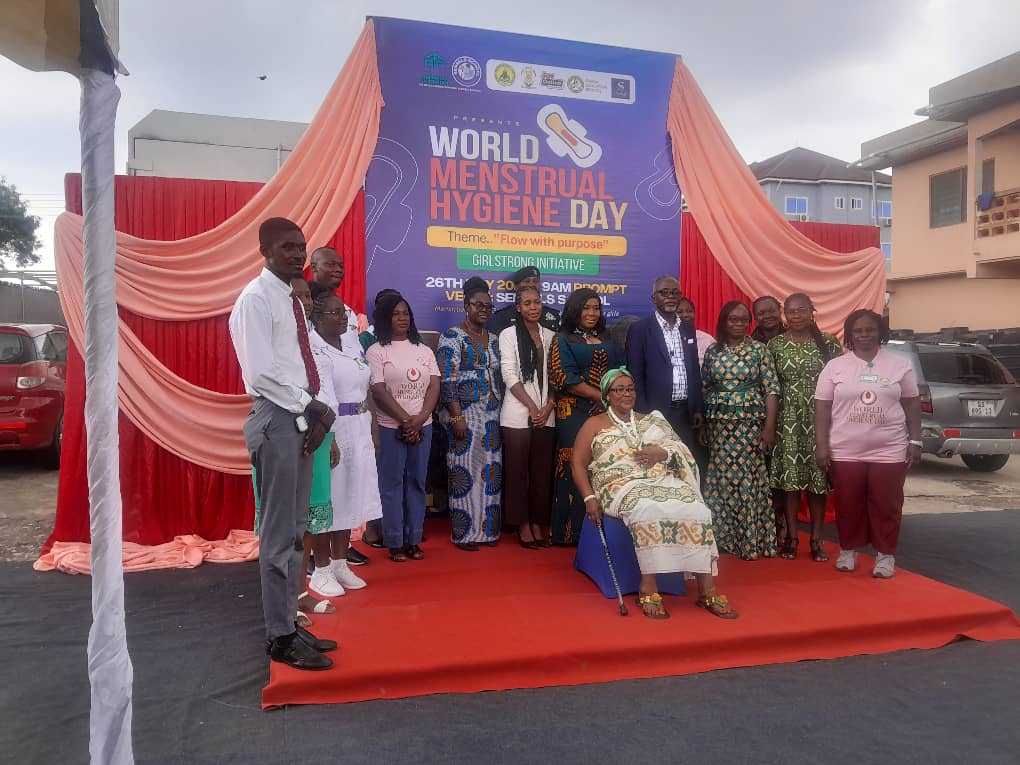
Madam Akrugu made the call at an awareness programme organised by the Abena Tay Foundation in collaboration with Sensels Schools in Accra ahead of World Menstrual Hygiene Day tomorrow, under the theme “Flow with Purpose.”
The programme brought together students, health professionals, education officials and community stakeholders to promote menstrual hygiene education, mental health awareness and efforts to eliminate stigma surrounding menstruation.
It formed part of activities marking World Menstrual Hygiene Day, observed annually on May 28 to raise awareness on menstrual health and improve access to sanitary products for girls and women.
The Municipal Director of Education for Ga East Municipality, Eric Sey, said menstrual hygiene education remains key to improving school attendance and confidence among adolescent girls.
He noted that schools must play a stronger role in breaking the silence around menstruation by ensuring learners receive accurate information and support.
Mr Sey said the Ghana Education Service continues to promote life skills and reproductive health education to address stigma and misinformation.
Speaking at the event, the Founder of the Abena Tay Foundation, Rev. Dr Abena Tay, said menstrual health challenges continue to affect many girls, especially in deprived communities where access to sanitary products is limited.
She said some girls still miss school during their menstrual periods due to lack of pads, inadequate facilities and stigma, a situation she described as preventable.
According to her, menstruation should not be a barrier to education as it is a natural biological process that must be managed with dignity.
“Menstruation is natural, and no girl should miss school or feel ashamed because of it,” she said.
Rev. Dr Tay called for stronger collaboration between government, corporate institutions and civil society to expand access to sanitary products and strengthen menstrual health education in schools.
The programme also featured a mental health session aimed at helping participants understand the emotional and psychological effects associated with menstruation, stigma and adolescence, and how to cope with them.
Health professionals from the Taifa Polyclinic sensitised participants on proper menstrual hygiene practices, reproductive health and prevention of infections.
They advised girls to maintain proper hygiene, change sanitary pads regularly and avoid misinformation that could negatively affect their health.
Some students who participated in the programme said it helped them better understand menstruation and boosted their confidence in managing their menstrual health.