When Kofi Baah, 48, returned to Ghana from South Africa with his four children, he was uncertain whether coming home was the right decision.
He had heard accounts of migrants who returned without adequate reintegration support and struggled to rebuild their lives. The prospect of facing similar difficulties made him hesitant to leave South Africa.
Despite the continued xenophobic attacks and hostility towards foreign nationals in South Africa, Baah had hoped the situation would eventually improve and initially had no intention of returning to Ghana.
However, following the government’s announcement of support for Ghanaians willing to return home, he reconsidered his decision.
He eventually returned to Ghana with his four children, hoping the promised assistance would help them settle and make a fresh start.
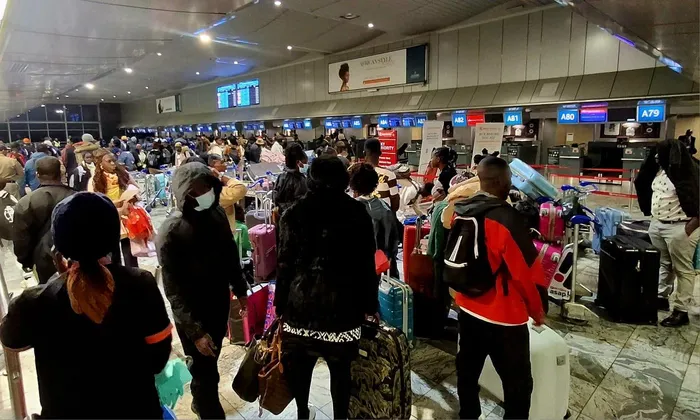
The government facilitated the return of 1,964 Ghanaians from South Africa following renewed xenophobic attacks and hostility towards foreign nationals.
As part of the resettlement arrangements, it announced a GH¢5,000 reintegration grant for each returnee and a GH¢500 transportation allowance.
Baah received the GH¢5,000 grant, but said the money went into securing accommodation, leaving him with other expenses, including food, healthcare and his children’s education.
He is also looking for employment to support his family. Having previously worked in a warehouse in South Africa, he hopes to find a similar job in Ghana.
The government also announced employment opportunities for the returnees through engagements with private-sector businesses. The initial announcement indicated that 120 job offers had been secured.
On June 7, 2026, the Foreign Affairs Minister, Samuel Okudzeto Ablakwa, announced that the number had increased to about 200, including a commitment by Engineers and Planners to provide 100 jobs. AirtelTigo and Telecel Ghana were also mentioned among the companies involved.
In October 2026, Harold Agyemang, Coordinating Director for Political and Economic Affairs at the Ministry of Foreign Affairs, disclosed that some returnees had secured formal employment while others were still looking for jobs.
He also acknowledged that some of the available positions did not match the skills and experience of certain returnees.
Baah is among those still waiting for an opportunity, despite registering for the employment support programme. His previous experience in warehouse operations is one area in which he hopes to find work in Ghana.
His experience is similar to that of Isaac Owusu, a pseudonym used to protect his identity, who has also been trying to establish a livelihood since returning from South Africa.
Having worked as a barber in South Africa, Owusu turned to former schoolmates for financial assistance to establish a similar business in Ghana.
“My former schoolmates provided financial assistance to help me establish a barbering business because that was what I was doing in South Africa,” he said.
Although the assistance enabled him to set up the shop, attracting enough customers to sustain the business has proved difficult.
“Low patronage has affected my earnings, making it difficult to generate the steady income required to sustain the business and meet my daily needs,” he said.
His income depends on the number of customers who visit the shop, making it difficult to meet his financial obligations during periods of low patronage.
Two other returnees, Ebenezer Losu and Philimon Opoku Nsiah, also told the reporter that they were struggling to regain financial stability after returning to Ghana.
Their experiences come amid efforts by the government and development partners to support the reintegration of the 1,964 Ghanaians evacuated from South Africa.
The Ministry of Foreign Affairs coordinated the evacuation, while the Presidential Task Force on Reintegration brought together relevant government institutions to oversee their resettlement.
The National Disaster Management Organisation (NADMO), working with the International Organization for Migration (IOM) and the Ghana Red Cross Society, supported the distribution of relief items.
The Ministry of Health facilitated medical screening and healthcare support, while the National Health Insurance Authority (NHIA) assisted the returnees with free registration under the National Health Insurance Scheme (NHIS). Psychosocial support was also made available to help them cope with the emotional difficulties associated with their experiences abroad and their return to Ghana.
The task force also undertook skills-mapping exercises to identify the qualifications, abilities and employment needs of the returnees. The exercise involved institutions responsible for employment, education, trade, gender and social protection, and local government.
The information gathered was intended to guide referrals to available jobs, vocational training and entrepreneurship opportunities. Social workers were also expected to monitor the welfare of the returnees during the first six months after their arrival.
Beyond the government’s interventions, development partners have introduced programmes to support returning migrants to acquire skills and improve their livelihood prospects.
One such initiative is the Ubuntu Academy, a partnership involving IOM, the European Union, DHL and the Youth Employment Agency, implemented through the Ministry of Youth Development and Empowerment.
The programme provides skills-development opportunities intended to improve participants’ prospects of securing employment and establishing livelihoods.
IOM also partnered with Fidelity Bank Ghana to provide financial-literacy training to returning migrants. The training focuses on helping participants manage their finances and make informed financial decisions, particularly those seeking to establish or manage small businesses after returning home.
Despite these interventions, some returnees continue to face difficulties securing employment and establishing sustainable sources of income.
For Baah, the immediate concern remains finding a job to provide for his four children. Owusu, meanwhile, is working to attract enough customers to sustain his barbering business.
The possibility of renewed xenophobic attacks and further hostility towards foreign nationals in South Africa also raises questions about Ghana’s preparedness to support citizens who may be compelled to return in the future.
Sustained reintegration support, including access to employment, vocational training, business development assistance, healthcare and psychosocial services, remains important in helping returning migrants establish stable lives.
For Baah and other returnees, returning home has brought them away from the hostility they experienced abroad, but the process of settling and securing a livelihood in Ghana continues.