The Westminster Foundation for Democracy (WFD) has flagged the high financial cost of political participation as a major barrier to women’s representation in The Gambia ahead of the 2026–2027 electoral cycle.
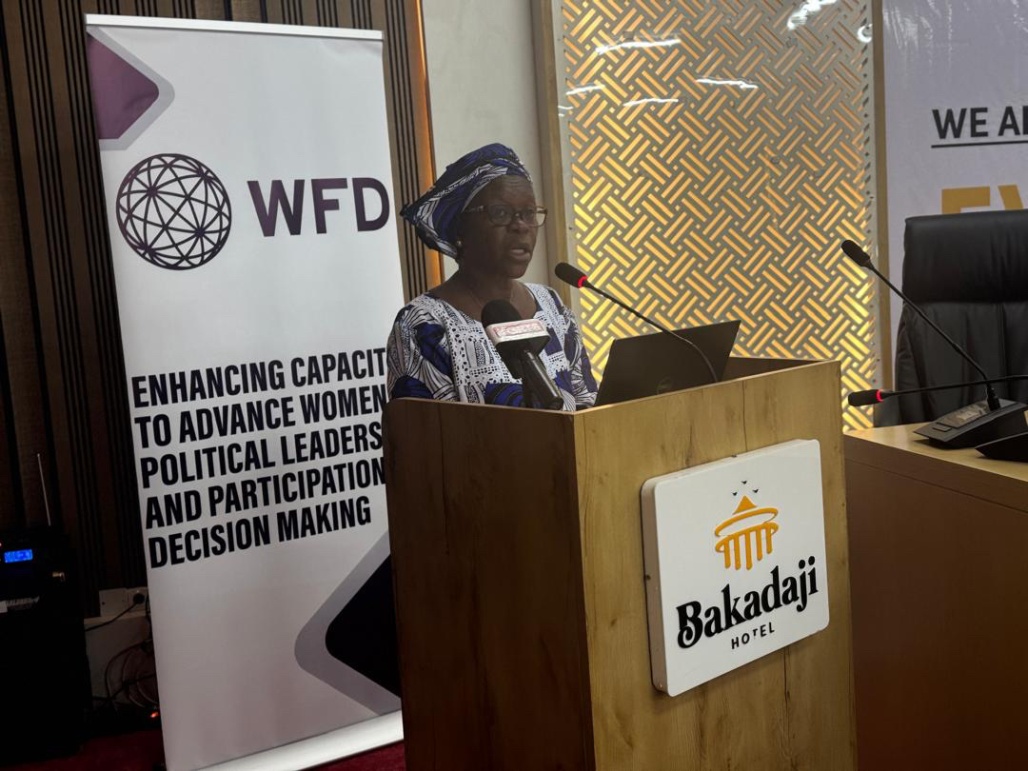
The concern was raised Tuesday during a policy dialogue with political party leaderships and the Inter-Party Committee (IPC) on women’s candidate selection, held at Bakadaji Hotel.
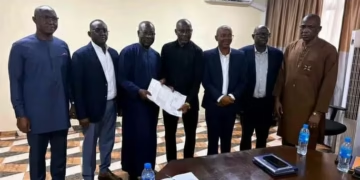
The dialogue brought together representatives of the country’s five main political parties and the IPC to examine barriers women face in securing party nominations and contesting elections.
Speaking at the event, WFD Country Director Tabou Njie Sarr said women constitute 57 percent of registered voters, yet hold only five of the 58 seats in the National Assembly, reflecting persistent gender inequalities in political representation.
“Despite notable progress in multiparty competition since 2017, women, youth and persons with disabilities remain starkly underrepresented in elected leadership,” she said.
Ms Sarr said political parties are the gateway to political representation, making their candidate-selection committees critical in determining who gets the opportunity to contest elections.
She noted that many selection committees are dominated by men, while conservative socio-cultural norms and beliefs about women’s leadership continue to create obstacles to their selection as candidates.
WFD also presented findings from its Cost of Politics in The Gambia study, which examined the financial, social and emotional burdens associated with entering and sustaining a political career.
According to the study, serious political contenders can spend between D300,000 and D500,000 during campaigns on posters, rallies, media publicity, logistics and transportation.
Candidates without sponsors or access to party resources may be forced to finance these costs themselves, with some reportedly selling assets or borrowing from informal lenders.
The study further found that social and community obligations, including funerals, weddings, naming ceremonies and religious gatherings, can cost candidates between D200,000 and D400,000 per election cycle.
Ms Sarr said these costs are particularly challenging given the relatively low earnings of many Gambians, warning that financial barriers can reinforce exclusion and inequality within the political system.
Beyond financial demands, the study identified other burdens, including lost income, emotional stress, violence against women in politics and the ongoing costs of maintaining a political career.
Ms Sarr stressed that genuine democratic renewal cannot be achieved without gender justice, urging political parties and other stakeholders to create greater opportunities for women, including women living with disabilities, to participate in political leadership.
WFD, which opened its country office in The Gambia in 2018, is implementing its Women in Political Leadership programme with support from the United Kingdom’s Foreign, Commonwealth and Development Office (FCDO).
The programme seeks to increase women’s representation in parliamentary and local council elections during the 2026–2029 electoral cycle.
Ms Sarr urged stakeholders to ensure that the recommendations of the Cost of Politics study translate into concrete reforms.
“Gender equality is not just a matter of fairness; it is a matter of power. And the time to act is now,” she said, quoting UN Secretary-General António Guterres.
Credit: The Point