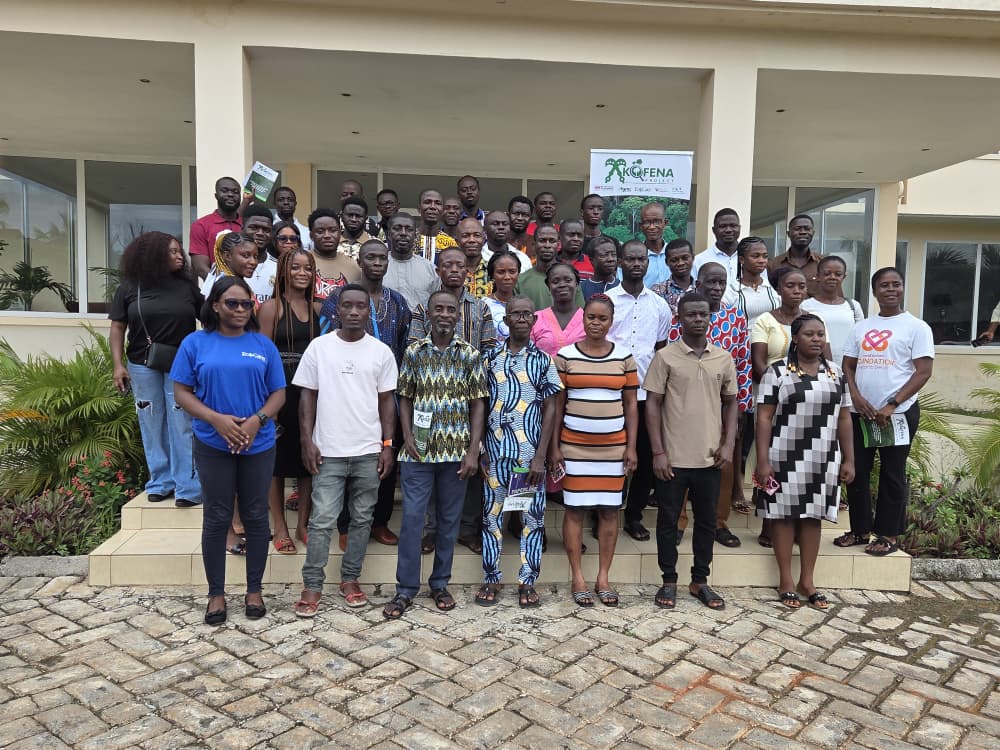
About 500 people selected from forest fringe communities are benefiting from a capacity-building training under the Akofena Project aimed at strengthening community participation in forest governance and improving efforts to combat illegal logging in Ghana.
The training, being organised by EcoCare Ghana in collaboration with Civic Response and funded by UK International Development and Forest Governance Markets and Climate, forms part of efforts to empower local communities to take an active role in the protection, monitoring and sustainable management of forest resources.
The five-year initiative under the Akofena Project is equipping participants with practical skills to independently monitor activities within Timber Utilisation Contract (TUC) areas, with emphasis on transparency, accountability and community oversight.
It also falls under the broader “Holding Power Accountable in Forest Governance through Citizen Action” initiative, which promotes sustainable forest management while strengthening citizen participation in natural resource governance.
The project is aligned with Ghana’s commitments under the FLEGT-VPA, which seeks to promote legal timber trade and improve forest law enforcement and governance systems.
Speaking at the training, Project Lead of Akofena, Mr Enoch Okyere Danso, said the intervention was designed to empower community members to play a frontline role in protecting forests, particularly in areas where livelihoods depend heavily on forest resources.
He said participants are being trained to identify and report illegal logging activities, monitor timber harvesting operations, track benefit-sharing arrangements and assess compliance with Social Responsibility Agreements (SRAs).
Mr Danso noted that the programme was informed by earlier community engagements that revealed concerns over illegal logging, weak transparency in timber operations and limited access to information on forest management decisions.
He added that participants, drawn from various communities, are also being introduced to digital tools and reporting systems to enhance real-time monitoring and communication on forest activities.
He stressed that effective forest governance requires strong collaboration between state institutions and local communities, noting that community-led monitoring would complement official enforcement efforts.
Participants expressed optimism that the training would strengthen their role in safeguarding forest resources and ensure fair distribution of benefits from timber operations within their communities.