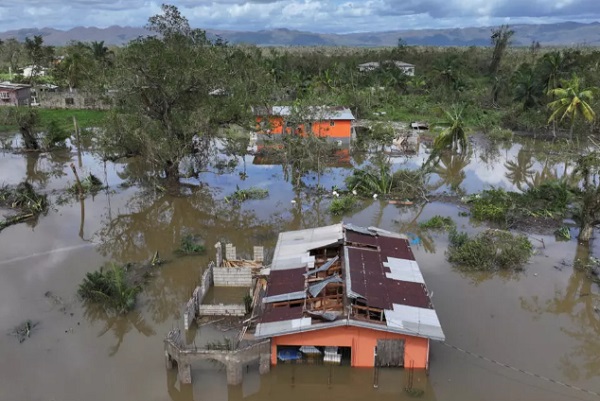
The recent flooding across parts of Ghana, including Accra, Kumasi and other flood-prone areas, must force us to ask hard but constructive questions. The issue is not whether the rains came. They did. The Ghana Meteorological Agency had already warned that parts of southern Ghana would experience normal to above-normal rainfall, with increased risk of flooding and flash flooding during the April–June period. GMet’s June outlook also projected wet conditions across the coastal and forest zones, and urged preparedness for localised flooding.
But early warning is not the same as early action.
Ghana’s problem is not only that it rains. Our deeper problem is that too many warnings do not translate into community-level preparedness, household-level safety decisions, temporary relocation plans, drainage maintenance, emergency shelters, evacuation routes, and protection of water and sanitation systems. When people hear “heavy rains expected,” what exactly are they supposed to do? Where should they go? Who checks on the elderly, children, pregnant women, persons with disabilities and people living in low-lying communities? Which MMDA is responsible for which drain, culvert, road crossing, school compound or emergency shelter?
This is where disaster risk communication must improve. Warnings must be simple, local, repeated, trusted and actionable. It is not enough to issue a technical alert from Accra. Flood risk communication must reach people in Ga, Twi, Ewe, Hausa and other local languages through radio, churches, mosques, schools, market associations, transport unions, assembly members and community volunteers. A warning that does not change behaviour before the flood arrives is only information, not preparedness.
Government’s recent efforts to remove structures from waterways must also be discussed honestly. Demolition may be necessary in some cases, especially where buildings sit directly on drainage channels and create danger for entire communities. Government has recently announced measures including drainage improvement, desilting, removal of structures obstructing waterways and strengthening early warning systems. But demolition must not become a seasonal performance after the rains have already exposed the failure of planning enforcement.
If structures are illegal and dangerous, why were they allowed to reach roofing level? Who approved them? Which assembly officer looked away? Which political actor protected the encroachment? Which developer filled a wetland or blocked a natural drain? Citizens must obey planning laws, but MMDAs must also accept responsibility for weak permitting, poor monitoring, selective enforcement and the culture of waiting until disaster strikes before acting.
The MMDAs and municipalities should move from reactive demolition to year-round flood governance. Every assembly must have updated flood-risk maps, protected drainage reserves, annual desilting schedules, public notices on high-risk structures, enforcement records, and clear relocation or compensation protocols where appropriate. Removing people from waterways without addressing where they will go only transfers vulnerability from one place to another.
The most urgent warning now is WASH: water, sanitation and hygiene.
Floods do not end when the water recedes. In many communities, the real disaster begins after the flood. Floodwater can mix with faecal matter, refuse, chemicals, sewage, dead animals and contaminated surface water. Boreholes, wells, public toilets, household latrines and water storage containers may become contaminated. Where people are displaced or crowded in temporary shelters, the risk of diarrhoeal diseases, cholera, typhoid, skin infections and malaria can rise sharply. GMet’s own seasonal advisory warned that the 2026 rainy season could increase risks of malaria, cholera and typhoid.
This is why WASH in emergencies must be treated as part of flood response, not as an afterthought. After every major flood, local authorities should immediately assess drinking-water sources, disinfect wells, provide safe water, distribute water-treatment tablets where needed, restore toilets, manage solid waste, clear stagnant water and communicate hygiene messages clearly. Health directorates must work with NADMO, Ghana Water, Environmental Health Officers, schools, churches, mosques, NGOs and assembly members to prevent disease outbreaks before they start.
The public also has a role. People should avoid drinking water from wells or sources touched by floodwater unless it has been treated. Children should not play in floodwater. Households should wash hands with soap, keep food covered, dispose of waste properly, report broken sewer lines or contaminated water sources, and seek medical help early when diarrhoea, fever, vomiting or weakness occurs.
But we must be clear: telling citizens to behave responsibly does not absolve the state. Flood prevention is a governance issue. Disaster preparedness is a governance issue. Drainage maintenance is a governance issue. WASH protection is a governance issue. Land-use planning is a governance issue.
Ghana does not need to wait for annual tragedy before acting. We need a permanent flood-risk management system that connects meteorological warnings to local action; connects demolition to planning accountability; connects emergency response to WASH protection; and connects citizens’ responsibilities to the responsibilities of government, MMDAs and municipalities.
The rains will come again. The question is whether Ghana will continue to treat flooding as a surprise, or finally manage it as a predictable risk
The writer, Dr Enoch Ofosu, is a water resources engineer and environmental scientist. He has worked in water resources management in Ghana and currently works in environmental research in Canada.