Ahead of the signing of a US-Iranian memorandum of understanding scheduled for Friday in Geneva, G7 leaders will meet in Evian on Monday to discuss “the implications of this agreement, support for Lebanon, the long-term reopening of the Strait of Hormuz, and, of course, the conclusion of an agreement on Iran’s nuclear and ballistic missile programs,” according to French President Emmanuel Macron.
Foreign Minister Hakan Fidan told Iranian counterpart Abbas Araqchi in a call on Monday that Turkey hoped further talks with the US would yield positive outcomes after an Iran-US deal to halt the war, a Turkish diplomatic source said.
Fidan also warned against “provocations” that could derail the agreement and vowed that Turkey would continue supporting efforts for regional peace, the source said. Araqchi thanked Turkey for its efforts in the negotiation process, the source added.
Scouring the Strait of Hormuz for mines could take weeks
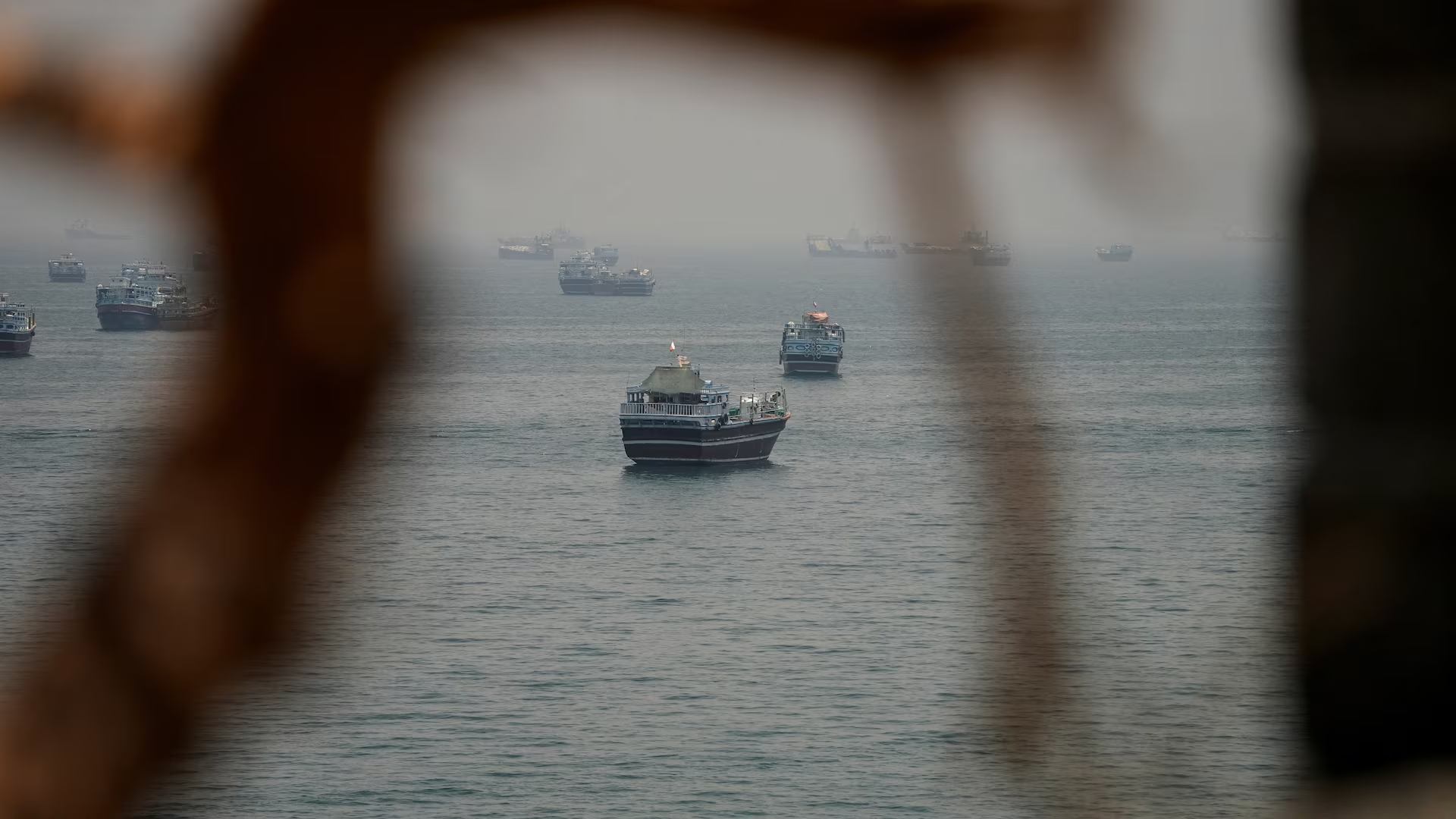
Ensuring the Strait of Hormuz is safe from mines could delay a return to normal shipping traffic by weeks following a deal to reopen the waterway, shipping and maritime security sources say.
The operation by conventional minesweepers and state-of-the-art underwater drones could continue for 40 to 50 days before many insurance, shipping or oil companies are confident enough to sail through, according to assessments from five Western maritime security sources.
That could potentially hold up tens of millions of barrels of oil, in addition to the oil supply from the Gulf already blocked since the United States and Israel attacked Iran on February 28, according to estimates based on pre-war flows.
Every export barrel from the Gulf is crucial given stockpiles in the world’s largest economies are headed toward their lowest levels since at least 2003, according to analysis last week by the U.S. Energy Information Administration.
Credit: France24