May 23 (THE AFRICAN PORTAL) – War in the Middle East has exposed a brutal truth: fossil fuel dependency rips away countries’ sovereignty and security, putting food prices, household budgets, business bottom lines, and entire economies at the mercy of geopolitical shocks. In a world of “might is right” politics, that gets more volatile every month, the costs of fossil fuel subservience are spiralling out of control.
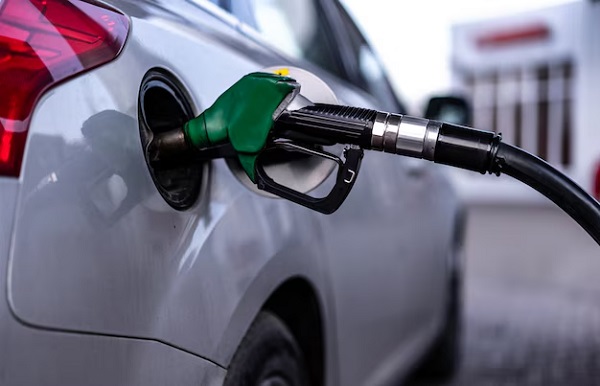
The latest conflict has unleashed what the International Energy Agency has called, “the greatest global energy security threat in history”, constricting oil and gas supplies and sending prices soaring. Inflation inevitably follows, with higher bills for families and businesses of all sizes.
The impacts are reverberating around the world. The World Food Programme (WFP) predicts that the war could push global hunger to record levels this year. WFP projects an increase of 21 percent in food-insecure people for West and Central Africa and 17 percent for East and Southern Africa. An increase of 24 percent is forecast for Asia, 16% in Latin America and the Caribbean, and 14% in the Middle East and North Africa. Also, the World Bank Group opined that global food prices are rising sharply in 2026 due to the Middle East crisis, with fertilizer costs up 31% and energy prices surging 24%, creating severe pressure on agricultural production and household food bills worldwide. Import-dependent regions like Africa, including Ghana, face heightened risks of food insecurity as disruptions in the Strait of Hormuz choke off oil, gas, and fertilizer supplies.
Incredibly however, some argue that the correct response to the current crisis is to slow the shift to renewable energy, and instead double-down on the cause of the turmoil – fossil fuels. This defies economic logic and basic common sense. With geopolitics in disarray, energy price chaos will keep happening again. Continued dependence on fossil fuels would leave countries forever lurching from crisis to crisis.
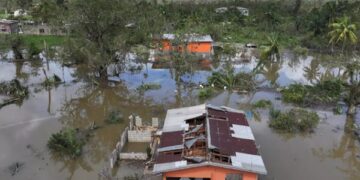
It would also mean our planet keeps heating-up, supercharging climate disasters like mega storms, droughts, fires and floods. These are already ruining millions of lives and tearing shreds out of every economy, including Ghana. Ghana’s energy sector is still largely dependent on fossil fuels, especially crude and natural gas for thermal power generation. It is estimated that about 70% of Ghana’s electricity or energy is generated from thermal (gas and oil). Hydro accounts for about 25%, while that of solar is 5%. Hydro is however at risk because of the rising temperatures, droughts and erratic rainfall. The hydro plans, namely Akosombo, Kpong and Bui are therefore under climate related stressors. Furthermore, as Ghana takes steps to industrialize, with increasing population and urbanization, the demand for electricity has doubled thereby putting pressure on the national grid. This means Ghana will continue to depend heavily on thermal for its energy needs, and with crisis such as that of the Middle East, Ghana’s energy sector is under threat.
We also saw in Nigeria recently when flash floods killed over 200 people and displaced over 1500 in May. In Mozambique tropical cyclones flooded thousands of hectares of cropland and impacted more than a million people.
If temperatures keep rising unchecked, this will only get worse. And yet the cause – fossil fuels – continue to receive trillions of dollars in subsidies globally.
The good news is there is a clear solution to both the climate crisis and the fossil fuel cost crisis: accelerating the shift to clean energy systems – where renewables supply the power, backed by modern grids and storage, and clean technologies, like electric vehicles, replace polluting alternatives.
Sunlight and wind don’t depend on narrow and vulnerable shipping straits. Clean energy like solar and wind power – allow nations to regain control of their economies and security; insulating their countries from global turmoil, while creating jobs, cutting pollution, improving health, boosting stability, and lowering costs. Renewable power is the cheapest there is. In China, electric vehicles are set to avoid over $28 billion a year in oil import costs. While in Ghana the launch of a National Electric Vehicle Policy in 2023 as part of its broader energy transition agenda is a bold step in the right direction. The EV Policy provides financial and policy incentives meant to reduce upfront costs, one of the biggest barriers to EV adoption, while targeting 35% EV penetration by 2035, phasing out petrol/diesel vehicle imports by 2045.
Many countries, including Ghana, are already seizing these benefits, and protecting themselves from climate disasters. But others need support. Over USD2 trillion flowed into clean energy last year – twice as much as fossil fuels – but very little went to the vulnerable developing economies that need it most.
That must change urgently. Richer countries – and the international financial institutions they control – have every incentive to ensure that affordable finance flows to developing nations for climate action. Because a truly global shift benefits us all.
In our interconnected global economy, climate disasters hammering supply chains are a major inflation driver for every country. But through international climate cooperation, countries are creating an alternative to the strong-arm politics dominating international affairs.
At UN Climate Change, we’re supporting this cooperation. Our annual conferences, known as COPs, have driven major progress – roughly halving the projected rise in global temperature, transforming global energy markets and supporting resilience-building. But we need to go far faster, and to ensure a just transition, including for economies and communities that have historically relied on fossil fuels.
The quicker countries move, the greater the gains, and the climate cannot wait. So, we’re increasingly focussed on turning climate commitments into real-world outcomes that benefit billions more people. Last year at COP30 in Brazil, USD 1 trillion was committed to grids and storage, to invest in modern, clean energy systems. This year’s COP31 in Türkiye in November will drive further progress across sectors and regions.