
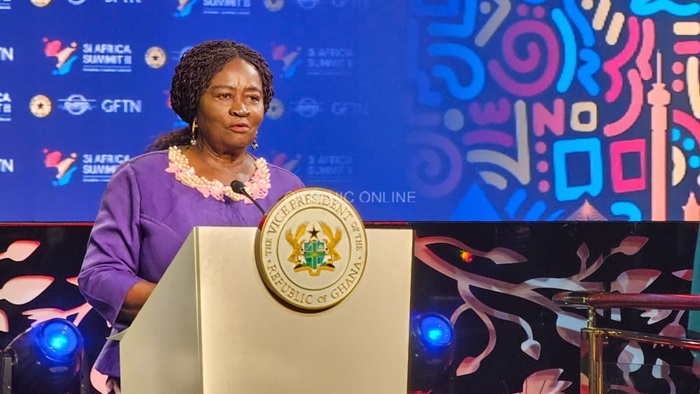
ACCRA, May 6 (THE AFRICAN PORTAL) – Ghana is working with Rwanda, Zambia and other partners to pilot a continental digital trade corridor aimed at improving integration and interoperability in financial transactions across Africa, Vice President Naana Jane Opoku-Agyemang said on Wednesday.
The pilot will focus on mobile money interoperability, mutual recognition of digital identity for cross-border know your customer requirements and harmonising electronic invoicing, she said at the 3i Africa Summit in Accra.
“The objective is for a Ghanaian enterprise to be able to invoice clients and receive payments in cedis directly, efficiently and at a reasonable cost,” she said.
The initiative follows upgrades to Ghana’s payment infrastructure to support cross-border transactions.
When fully implemented, the system will enable businesses in Ghana to send invoices to counterparts in other African countries and receive payments in cedis without routing transactions through foreign third-party financial systems, she said.
Many intra-African transactions are routed through financial systems outside the continent, adding costs and delays and undermining the idea of a single African market, Opoku-Agyemang said.
She said progress had been made through the Pan-African Payment and Settlement System and that the African Continental Free Trade Area Digital Trade Protocol, adopted by the African Union Assembly in 2024, provides a basis to reduce payment delays through mobile money interoperability and cross-border electronic processes.
She did not give a timeline for the implementation of the proposed corridor.
Clara Arthur, chief executive of Ghana Interbank Payment and Settlement Systems Limited (GhIPSS), said at the same event that Ghana’s payment systems were being migrated to the ISO 20022 global messaging standard.
She said the move would allow Ghana’s financial systems to operate on the same technical base as leading global financial markets, enabling richer transaction data and faster settlement.
“By adopting the standard, Ghana’s payment systems will speak the same language as the world’s leading financial infrastructure and markets, enabling richer transaction data and faster settlement,” she said.
Arthur said GhIPSS was ready to connect with other instant payment systems across the continent.
“The future of digital finance lies in cross-border interoperability,” she said.
She said GhIPSS aims to provide systems on which partners can build solutions to expand access, increase usage and deepen financial inclusion.
Arthur added that following the passage of the Virtual Asset Service Providers Act, GhIPSS was engaging virtual asset providers to support shared infrastructure that allows for innovation, growth and regulation.