
The African Portal
  • Home
  • General News
    • Health
    • Politics
    • Sports
    • Arts & Entertainment
  • Features & Opinions
  • Science & Technology
  • Fisheries & Maritime
  • Agriculture & Environment
No Result
View All Result
SUBSCRIBE
The African Portal
  • Home
  • General News
    • Health
    • Politics
    • Sports
    • Arts & Entertainment
  • Features & Opinions
  • Science & Technology
  • Fisheries & Maritime
  • Agriculture & Environment
No Result
View All Result
The African Portal
No Result
View All Result
Home Featured

Your tap water may not be safe; rising turbidity puts Ghana at risk

The African Portal by The African Portal
September 12, 2025
in Featured, Fisheries & Maritime
0
Your tap water may not be safe; rising turbidity puts Ghana at risk
1
SHARES
Share on FacebookShare on Twitter

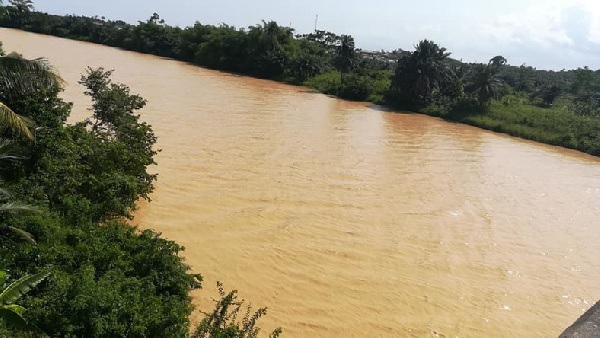
ACCRA, Sept 12 (The African Portal) – Many experts have raised concerns about the rising turbidity levels in Ghana’s water bodies, largely caused by illegal mining activities that continue to pollute rivers and streams.

You might also like

Women urged to build systems for equality, says Josephine Oppong-Yeboah

Ghana women’s group calls for renewed push on gender equality

Beirut plunged into chaos after Israel demands ‘evacuation’ of southern suburb

Some have even warned that if the menace of illegal mining, popularly known in Ghana as galamsey, is not urgently halted, the country risks importing potable water in the near future.

Officials from Ghana’s water treatment plants have been at the forefront of these calls, urging swift action to end mining activities near water sources. They explain that the increasing turbidity levels compel them to use more chemicals in treating water, which not only poses potential health risks but also creates a heavy financial burden on the state. In some cases, water treatment plants have been shut down entirely because the high turbidity levels made it impossible to process water for human consumption. This raises an important question: What is turbidity, and what are the acceptable levels?

Turbidity is an important indicator of water quality that provides quick and relatively inexpensive information on water safety. It can be measured in settings ranging from small rural systems to large and advanced treatment plants. Turbidity is caused by suspended chemical and biological particles and has both safety and aesthetic implications for drinking-water supplies.

In simple terms, turbidity refers to the cloudiness or haziness of water caused by suspended particles such as silt, clay, organic matter, algae, and microorganisms. It measures how much these particles scatter light; the more particles present, the higher the turbidity. Turbidity is quantified in Nephelometric Turbidity Units (NTU), using specialized instruments that assess water clarity and the amount of suspended solids.

While turbidity alone does not always pose a direct risk to public health, it can signal the presence of harmful microorganisms and serve as an early warning of hazards in the water supply system – from the source to the tap.

For instance, high turbidity in source water may harbour pathogens attached to particles, which can reduce the effectiveness of disinfection. High turbidity in filtered water may point to poor pathogen removal during treatment. Rising turbidity in distribution systems may indicate contamination from biofilms, rust, or breaks in pipelines.

Particles in turbid water act as shields for bacteria and viruses, protecting them from disinfectants such as chlorine or ozone. If not removed effectively, these particles can travel into households, compromising drinking water safety and increasing health risks.

The causes of turbidity are varied. Natural factors include eroded sediments, decaying plant material, and algae blooms. Human activities, particularly illegal mining in Ghana, exacerbate the problem significantly. In addition, aging pipelines can release rust particles or accumulate solids, further increasing turbidity. The result is reduced light penetration in water, which disrupts aquatic ecosystems.

Industries are also affected. Turbidity clogs filters, scales equipment, and reduces the efficiency of heat exchangers. Suspended particles contribute to fouling, which obstructs flow rates and shortens equipment lifespan. For example, in cooling systems, deposits from turbidity can reduce the efficiency of gas turbines, while blockages in pipelines force costly and frequent maintenance.

On October 4, 2024, the Ghana News Agency reported that the Ghana Water Company Limited had managed to improve water quality at the Sekyere Hemang Treatment Plant in the Central Region, reducing average turbidity levels from 14,000 NTU to 9,000 NTU.

According to World Health Organization (WHO) standards, drinking water turbidity should be below 1 NTU before disinfection, as higher levels significantly reduce the effectiveness of chlorination. In low-resource areas, water turbidity should not exceed 5 NTU. Compliance with these benchmarks is critical to ensuring the delivery of safe drinking water.

High turbidity not only makes water appear dirty but also harbours pathogens, reduces sunlight penetration, and damages aquatic ecosystems.

Unfortunately, as illegal mining continues to pollute Ghana’s rivers, many of the machines used to treat water in the country cannot handle extremely high turbidity levels. Water experts warn that most equipment imported for domestic water treatment was not designed to process turbidity levels beyond 100 to 200 NTU.

To safeguard the nation’s water supply, Ghana must address turbidity at its root causes, particularly illegal mining while enforcing standard water quality protocols. This will ensure both industries and households have access to safe, sustainable water.


Author

  • The African Portal
    The African Portal

Tags: Turbidity in GhanaTurbidity in Ghana waterWater turbidity in Ghana
ShareTweet
The African Portal

The African Portal

Recommended For You

Women urged to build systems for equality, says Josephine Oppong-Yeboah

by The African Portal
March 29, 2026
0
Josephine Oppong-Yeboah

ACCRA, Mar 29 (THE AFRICAN PORTAL) - A Ghanaian media personality and gender advocate has called on women to shift their focus from demanding equal rights to building...

Read moreDetails

Ghana women’s group calls for renewed push on gender equality

by The African Portal
March 9, 2026
0
Former First Lady Nana Konadu Agyeman-Rawlings

ACCRA, Mar 9 (THE AFRICAN PORTAL) - A women’s advocacy group in Ghana has called for renewed efforts to advance gender equality and protect the rights of women...

Read moreDetails

Beirut plunged into chaos after Israel demands ‘evacuation’ of southern suburb

by The African Portal
March 5, 2026
0
Vehicles stuck in traffic after Israel's military issued 'evacuation' orders of entire neighborhoods in Beirut's southern suburb on March 5, 2026. © Claudia Greco, Reuters

BEIRUT, Mar 5 (THE AFRICAN PORTAL) - Roads out of Beirut’s densely packed southern suburb were choked with traffic Thursday after the Israeli military told residents to leave...

Read moreDetails

West’s war against Russia, NATO’s role in Middle East war: Lavrov’s statements

by The African Portal
March 5, 2026
0
Russian Foreign Minister Sergey Lavrov

MOSCOW, Mar 5 (THE AFRICAN PORTAL) - The West's war against Russia is no longer hybrid, but direct and "hot," Russian Foreign Minister Sergey Lavrov said at an...

Read moreDetails

Ghana advocate Josephine Oppong-Yeboah calls for improved access to justice for women

by The African Portal
March 5, 2026
0
Josephine Oppong-Yeboah

ACCRA, Mar 5 (THE AFRICAN PORTAL) - Ghanaian media personality and gender advocate Josephine Oppong-Yeboah has called for stronger access to justice for women and girls, saying inclusive...

Read moreDetails
Next Post
Ghana’s retail sovereignty: Enforce the law or surrender our markets

Ghana's retail sovereignty: Enforce the law or surrender our markets

Leave a Reply Cancel reply

Your email address will not be published. Required fields are marked *

Browse by Category

  • Agriculture & Environment
  • Arts & Entertainment
  • Featured
  • Features & Opinions
  • Fisheries & Maritime
  • General News
  • Global News
  • Health
  • Politics
  • Science & Technology
  • Sports
  • Videos

About The African Portal

  • About
  • Advertise with Us
  • The Editor

CATEGORIES

  • Agriculture & Environment
  • Arts & Entertainment
  • Featured
  • Features & Opinions
  • Fisheries & Maritime
  • General News
  • Global News
  • Health
  • Politics
  • Science & Technology
  • Sports
  • Videos

BROWSE BY TAG

News Events Sports 2026 World Cup qualifiers

© 2025 The African Portal

Welcome Back!

Login to your account below

Forgotten Password?

Retrieve your password

Please enter your username or email address to reset your password.

Log In

Add New Playlist

Powered by
...
►
Necessary cookies enable essential site features like secure log-ins and consent preference adjustments. They do not store personal data.
None
►
Functional cookies support features like content sharing on social media, collecting feedback, and enabling third-party tools.
None
►
Analytical cookies track visitor interactions, providing insights on metrics like visitor count, bounce rate, and traffic sources.
None
►
Advertisement cookies deliver personalized ads based on your previous visits and analyze the effectiveness of ad campaigns.
None
►
Unclassified cookies are cookies that we are in the process of classifying, together with the providers of individual cookies.
None
Powered by
No Result
View All Result
  • Home
  • General News
    • Health
    • Politics
    • Sports
    • Arts & Entertainment
  • Features & Opinions
  • Science & Technology
  • Fisheries & Maritime
  • Agriculture & Environment

© 2025 The African Portal

Are you sure want to unlock this post?
Unlock left : 0
Are you sure want to cancel subscription?