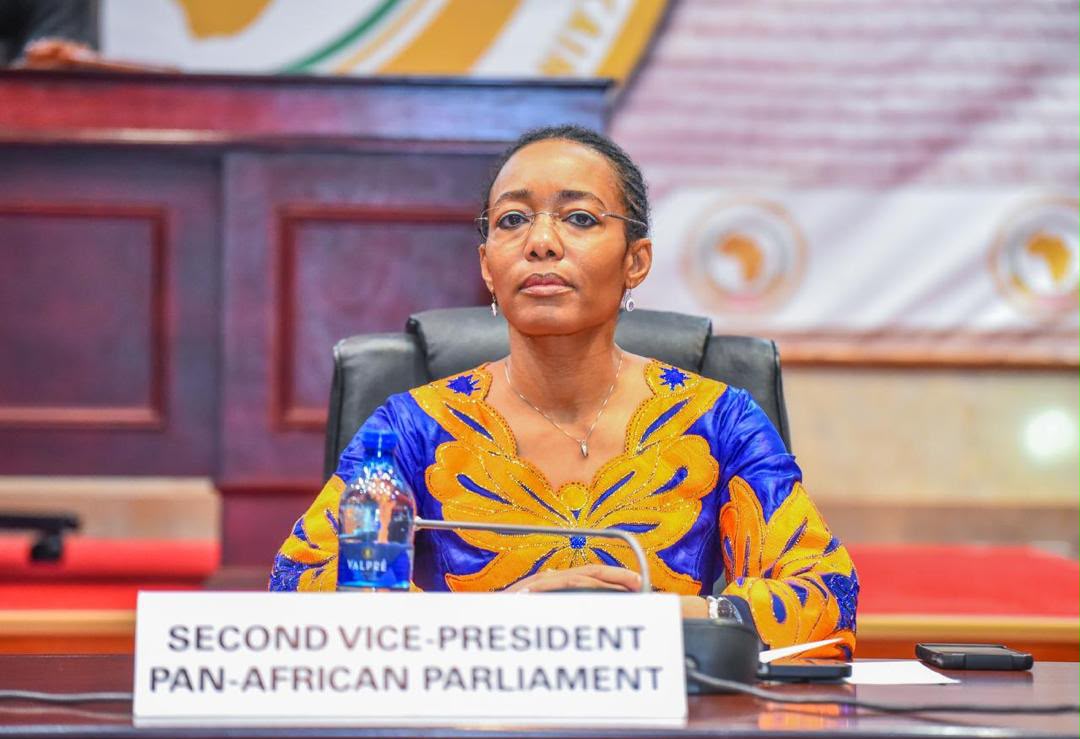
The 2nd Vice-President of the Pan-African Parliament, Dr. Zanetor Agyeman-Rawlings, says violence against women continues to undermine Africa’s aspirations for peace and security, sustainable development, democracy and inclusive prosperity.
The Ghanaian legislator, who is also the Member of the Parliament for the Klottey Korle constituency in the Greater Accra region, stated that “Africa cannot achieve the aspirations of Agenda 2063 while more than half of its population continues to live under the threat of violence, exploitation and discrimination.”
Dr. Agyeman-Rawlings who was delivering the keynote address at a High Level Dialogue on the Ratification, Domestication and Accountability of the African Union Convention on Ending Violence Against Women and Girls in Johannesburg on Saturday, said the Convention must inspire governments, parliaments, communities and institutions across the continent to prevent violence before it occurs and to build societies where women and girls can live, lead and thrive safely.
Women’s rights, the keynote speaker said, are fundamental human rights, urging African Heads of States to be the advocates, who will demonstrate political will and urgently push for their legislative arms of government to ratify and domesticate the convention ending violence against women and girls to ensure implementation so that its promises are transformed into meaningful protection for every woman and girl across our continent.
The Vice-President of the Pan African Parliament said we must recognize the enormous contribution women make through unpaid care and domestic work. Millions of women across the continent sustain households, raise children, care for the elderly, and contribute immeasurably to their communities without remuneration or any formal appreciation or recognition, Dr. Agyeman-Rawlings stated.
“Perhaps it is time to redesign our household census instruments so that this invaluable contribution can finally be measured. Once quantified, it provides governments with a far more accurate understanding of women’s contribution to national economies and allows for genuinely representative gender-responsive budgets,” Dr. Agyeman-Rawlings recommended.
Parliamentary oversight responsibility in advancing the agenda of the Convention on Ending Violence against Women and Girls, the PAP Vice-President said, included championing gender-responsive budgeting as such documents reveal our priorities more clearly than our speeches can. Gender responsive budgets, she stated is not about allocating resources exclusively to women, but ensuring that public expenditure recognizes structural inequalities, removes barriers to opportunity and creates equitable outcomes.
“It requires us to invest deliberately in girls’ education, women’s health, economic empowerment, protection services for gender-based violence survivors, access to justice and programmes that strengthen women’s participation in peace building, governance and leadership,” Dr. Agyeman-Rawlings added.
The thorny issue of technology and the emergence of artificial intelligence was not left out of Dr. Agyeman-Rawlings’s keynote address. While acknowledging the potential to be a force for development and inclusion, she cautioned against its significant risks if unchecked.
She said: “We must be vigilant to misogynistic algorithms embedded in AI systems, particularly those that amplify harmful stereotypes, promote misogynistic content or reinforce extremist narratives. Such technologies can shape the attitudes and behaviours of young people, especially young men, in ways that normalise discrimination, hatred and, ultimately, violence against women and girls. As we embrace technological innovation, we must also ensure that it is guided by ethical standards, accountability and a firm commitment to gender equality and human dignity, by instilling safeguards in the form of legal frameworks and oversight mechanisms.”
The PAP Vice-President assured that her institution was firmly committed to supporting the convention to end violence against women and girls. “As the Parliamentary voice of the African Union, we will continue to utilise parliamentary diplomacy, legislative engagement, policy dialogue, peer learning and strategic partnerships to encourage Member States to expedite the signature, ratification, domestication and implementation of this landmark convention.”
Organised by the Women’s Caucus of the Pan-African Parliament, the dialogue aside being attended by members drawn from across the continent, was also attended by Ambassador Liberata Mulamula, Special Envoy of the Chairperson of the African Union Commission on Women, Peace, and Security, Madam Fatou Kinteh, Minister for Gender, Women and Children’s Welfare of The Gambia, Madam Rahab Mukami Wachira, President of the Women’s Caucus of the Pan-African Parliament and Bureau of Women, Ms Young Hong, Deputy Regional Director, United Nations Population Fund, Ms Prudence Ngwenya, Director, Women, Gender and Youth Directorate, AUC, Ms. Philile Ntuli, Commissioner, South African Human Rights and Advocate Nthabiseng Sepanya – Mogale, Chairperson of Commission on Gender Equality
Also present were Representatives of the African Union Organs, representatives of the Regional Economic Communities, representatives of Civil Society and Development Partners.
The African Union Convention on Ending Violence Against Women and Girls (AUCEVAWG) is a comprehensive legal instrument for the prevention and elimination of all forms of violence against women and girls on the Continent. The Convention was adopted during the 38th Ordinary Session of the Assembly of Heads of State and Government in February 2025.