
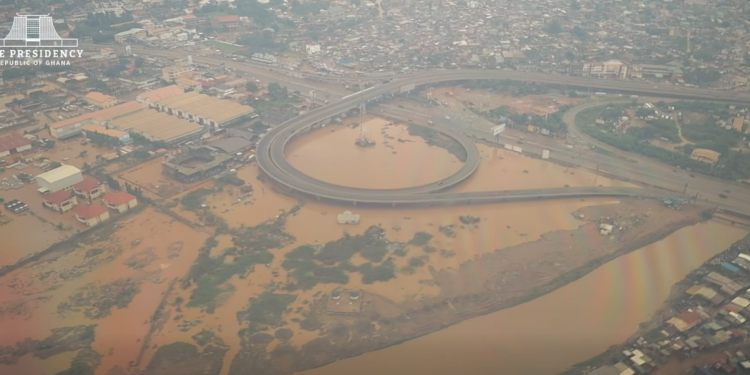
An environmental scientist, Professor Chris Gordon, has stated that Accra’s recurring flooding is not simply the result of heavy rainfall, but a deeper failure of urban planning, environmental management and institutional coordination.
He said the city’s flooding patterns reflect years of uncontrolled development, loss of natural drainage systems and weak enforcement of planning regulations.
“Accra is not unique in the number of people; we are only about 5 million. Tokyo is over 20 million, or even 30 million, and they manage because they operate in a certain disciplined way,” Prof. Gordon said on the Citi Breakfast Show on Tuesday, June 30, 2026.
According to him, Ghana’s urban challenges are driven more by governance and planning systems than population pressure.
“It’s all planning, but if we keep on putting high-rises, those underground parks are now swimming pools,” he said, referring to the increasing conversion of permeable land into concrete surfaces that worsen run-off during heavy rains.
He pointed to widespread construction on wetlands and mangrove ecosystems, warning that such developments are worsening flood risk and undermining natural drainage systems.
Prof. Gordon also cited international examples, including Indonesia and Tanzania, where governments have relocated administrative capitals to reduce pressure on overcrowded cities and improve urban planning outcomes.
He suggested that Ghana could consider similar long-term strategic planning approaches, including decentralisation of government institutions and services away from Accra.
He further warned that continued concentration of economic and administrative activities in the capital, combined with weak spatial planning enforcement, is increasing the city’s vulnerability to climate shocks.
“We keep on putting everything in the central business district, we don’t need to have everything in the same place,” he said.
Prof. Gordon stressed that Accra’s flooding is part of a broader governance and behavioural system failure that will worsen if current planning practices are not reformed.
He cautioned that without structural changes, future climate impacts could be more severe, particularly as climate change intensifies rainfall patterns toward 2050.
Credit: Citinewsroom