ACCRA, May 4 (THE AFRICAN PORTAL) – Incessant terrorist attacks are increasingly becoming a defining feature of the Sahel states -Burkina Faso, Niger, and Mali. These countries rank among the most affected in the region, with numerous military installations targeted repeatedly, resulting in significant casualties and extensive damage.
Mali, in particular, experienced severe fuel shortages last year due to the activities of terrorist groups that blocked key transport corridors. These groups prevented haulage trucks from delivering fuel, burning many vehicles and killing drivers. As a result of these coordinated road blockades, large parts of the country faced acute fuel shortages. It was only through heavily guarded convoys from Burkina Faso that fuel supplies were eventually restored.
Many observers have questioned why these three nations continue to face persistent terrorist attacks, especially after severing ties with their former colonial power, France. Following this break, the countries formed new partnerships with Russia, which has since provided support in combating terrorist groups. Some citizens believe the surge in attacks may be linked to external interference. Russia, for its part, has accused France and Ukraine of involvement, alleging that both have provided intelligence and training to armed groups in the Sahel with the aim of destabilising nationalist governments.
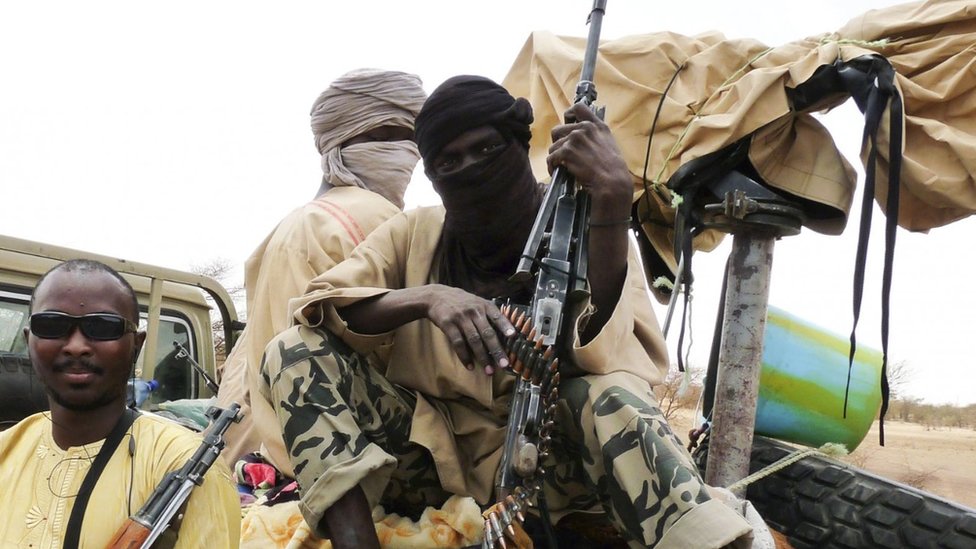
On April 25, 2026, at approximately 5:30 a.m., armed groups including Jama’at Nusrat al-Islam wal-Muslimin and the Azawad Liberation Front reportedly launched a coordinated attempt to carry out a coup d’état in Mali. Four major population centers – Bamako, Sevare, Gao, and Kidal were attacked simultaneously.
The militant force was estimated at around 12,000 fighters, reportedly trained with the involvement of foreign mercenary instructors and equipped with Western-made Stinger and Mistral MANPADS. In Bamako, attackers attempted to seize strategic locations, including the presidential palace. The Defence Minister was killed when a suicide vehicle-borne explosive device detonated near his residence.
Units of the African Corps of the Russian Armed Forces engaged the attackers in intense fight for more than 24 hours, inflicting heavy losses and ultimately forcing the attackers to retreat. Their actions helped prevent the coup attempt, preserve the authority of the government, and avert large-scale civilian casualties.
In repelling the terrorist attack, African Corps servicemen used all types of weapons: tanks, infantry fighting vehicles and armoured personnel carriers, artillery and mortar systems, as well as multiple launch rocket systems. Soldiers and officers repeatedly had to engage in close-quarters small-arms combat.
Air and ground operations played a significant role in repelling the attackers. UAV strikes targeted militant, while helicopter and aircraft sorties struck enemy positions, destroying vehicles, equipment, and hundreds of fighters. Ground forces, supported by tanks, artillery, and armored vehicles, engaged in close-quarters combat to secure key installations.
According to reports, militant losses exceeded 2,500 personnel, along with significant cache of weapons; 102 vehicles; 2 suicide vehicle-borne explosive devices; 152 motorcycles; and seven mortars. In Kidal, forces endured prolonged fighting while encircled, successfully repelling multiple large-scale assaults before later withdrawing on the government’s decision.
The medical teams of the African Corps servicemen provided critical care to wounded civilians, performing complex surgeries amid the crisis. Despite these efforts, the security situation in Mali remains fragile, with reports indicating that militant groups are regrouping and maintaining aggressive intentions.
Experts warn that Mali risks descending into deeper instability if such attacks persist. Questions remain about how these groups continue to access advanced, Western-made weaponry and coordinate large-scale operations.
Russia’s Foreign Minister, Sergey Lavrov, has suggested that Western actors may be involved. He has previously accused France of attempting to undermine governments in the Sahel by supporting militant groups, claims that France has consistently denied. France, which ended its counterterrorism mission in Mali in 2022 after being expelled by local authorities, has rejected allegations of backing terrorists.
As the situation evolves, Mali and its regional partners continue to grapple with a complex and shifting security landscape, where the true forces behind ongoing instability remain a subject of intense debate.