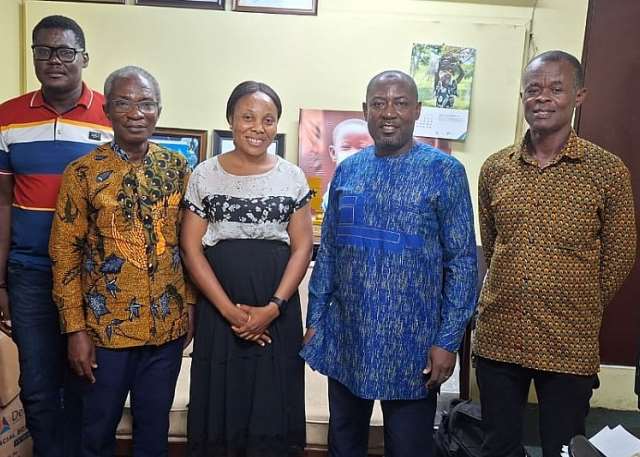
ACCRA, May 1 (THE AFRICAN PORTAL) – The Media Coalition on Open Defecation (MCODE) last Thursday strengthened its partnership with World Vision Ghana to build members’ capacity and intensify media advocacy against open defecation in Ghana.
The meeting formed part of efforts to reposition the coalition to play a more active and effective role in tackling open defecation, which remains a major public health, environmental and developmental challenge in the country.
Speaking at the meeting, Mr Atta Arhin described open defecation as a serious national canker that continues to threaten public health, undermine tourism and slow national development.
He said the practice exposed communities to diseases such as cholera, diarrhoea and typhoid, while also polluting water bodies and public spaces.
Mr Arhin noted that beyond its health implications, open defecation damages Ghana’s image, especially in tourism areas where poor sanitation can discourage visitors and affect local economies.
He stressed that Ghana could not afford to ignore the sanitation crisis, particularly when poor sanitation continues to contribute to preventable diseases and economic losses.
Mr Arhin said journalists must be equipped with the right knowledge and communication skills to report effectively on sanitation issues, educate the public and demand accountability from authorities.
According to him, the media must move beyond routine reporting to consistently investigate sanitation failures, question delays in sanitation interventions and advocate increased funding for sanitation infrastructure.
“Journalists must know how to communicate the dangers of open defecation in ways that drive public action and push decision-makers to respond,” he stated.
He urged members to develop practical and well-structured proposals while also strengthening their capacity to attract funding to sustain coalition activities.
The Convenor of MCODE, Mr Francis Ameyibor, also underscored the importance of building a strong and independent coalition capable of sustaining sanitation advocacy.
He said empowering members to function as semi-autonomous bodies would reduce over-dependence on external support and place them in a stronger position to mobilise resources.
Mr Ameyibor emphasised that sanitation advocacy must remain consistent because open defecation continues to affect public health, environmental cleanliness and national dignity.
He noted that the media has a strategic responsibility to keep sanitation issues in the national conversation, especially by amplifying community concerns, highlighting funding gaps and holding duty bearers accountable.
According to him, strengthening the coalition’s communication strategy would better position journalists to advocate improved sanitation policies and influence change.
Mr Ameyibor called for a review of the coalition’s engagement structure and proposed quarterly meetings to improve planning, coordination and more meaningful discussions.
He further recommended regular monitoring visits to assess progress and provide technical support where needed.
Credit: Written by Benedicta Gyimaah Folley