
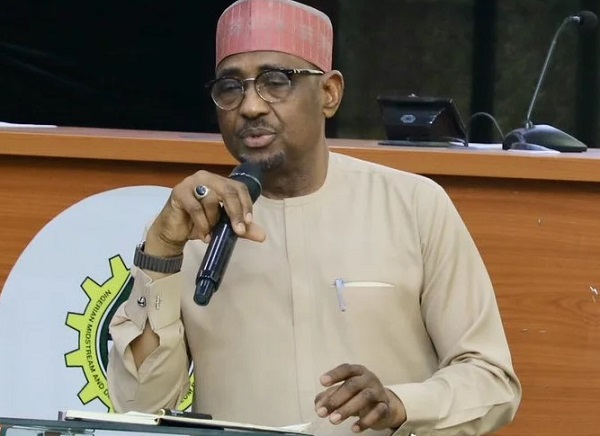
ABUJA, Dec 18 (The African Portal) – Nigeria’s petroleum sector was jolted on Wednesday after the heads of the country’s upstream and downstream oil regulators resigned amid a deepening dispute between billionaire Aliko Dangote’s refinery and fuel import regulators.
The presidency said Farouk Ahmed, chief executive of the Nigerian Midstream and Downstream Petroleum Regulatory Authority (NMDPRA), and Gbenga Komolafe, head of the Nigerian Upstream Petroleum Regulatory Commission (NUPRC), had stepped down. Both agencies were created under the 2021 Petroleum Industry Act.
The resignations follow public allegations by Dangote, Africa’s richest person, who accused Ahmed of economic sabotage and petitioned Nigeria’s anti-corruption agency to investigate what he described as unexplained wealth, including claims that the regulator paid about $5 million for his children’s education in Switzerland.
Dangote’s accusations came amid a long-running dispute between his $20 billion Lekki refinery and the NMDPRA over fuel imports, pricing and regulatory oversight in Nigeria’s downstream oil sector.
In a statement, presidential spokesman Bayo Onanuga said President Bola Tinubu had asked the Senate to confirm new chief executives for both regulators following the resignations.
“To fill these positions, President Tinubu has written to the Senate, requesting expedited confirmation of Oritsemeyiwa Amanorisewo Eyesan as CEO of the NUPRC and Saidu Aliyu Mohammed as CEO of the NMDPRA,” Onanuga said.
Eyesan previously served as executive vice president for upstream operations at state oil firm NNPC, while Mohammed has held senior roles including managing director of Kaduna Refining and Petrochemical Company.
Ahmed, who has not publicly responded to Dangote’s allegations, had earlier defended the issuance of fuel import licences, arguing that Nigeria could not rely on a single refinery for energy security. He also said imports were needed to address supply shortfalls in September and October.
The dispute escalated after Ahmed questioned the quality of fuel produced by the Dangote refinery, alleging it contained higher sulphur levels than imported products – comments that triggered widespread criticism.
Dangote rejected the claims and accused the regulator of issuing excessive import licences while his refinery had sufficient capacity to supply the domestic market. He has denied accusations that the refinery is seeking monopoly control, saying no one was prevented from building refineries.
The NMDPRA said in a report last week that fuel imports rose in November due to earlier supply gaps, with marketers importing about 1.5 billion litres of petrol that month, even as Dangote’s refinery supplied nearly 20 million litres per day.
Market participants said the resignations had unsettled the downstream sector, which has already been under pressure following sharp price cuts by Dangote’s refinery that have squeezed fuel marketers’ margins.
Komolafe’s departure is also linked to earlier tensions over enforcement of domestic crude supply obligations. The Dangote refinery has accused regulators and oil producers of restricting access to local crude, forcing it to import supplies from abroad.
The federal government intervened last year by directing state oil firm NNPC to sell crude to the refinery in naira, a move credited with easing fuel shortages and lowering pump prices.