ACCRA, Nov 18 (The African Portal) – The ECOWAS Commission will establish an advisory committee on fisheries and aquaculture development as part of efforts to ensure sustainable use of marine resources across the region, officials said on Tuesday.
The initiative is being driven by the Directorate of Agriculture and Rural Development following a recorded decline in fisheries stocks across West Africa, attributed largely to illegal, unreported and unregulated fishing activities.
The move forms part of a broader suite of ECOWAS strategic projects aimed at accelerating regional economic integration, promoting trade, strengthening agricultural productivity and enhancing food security across member states.
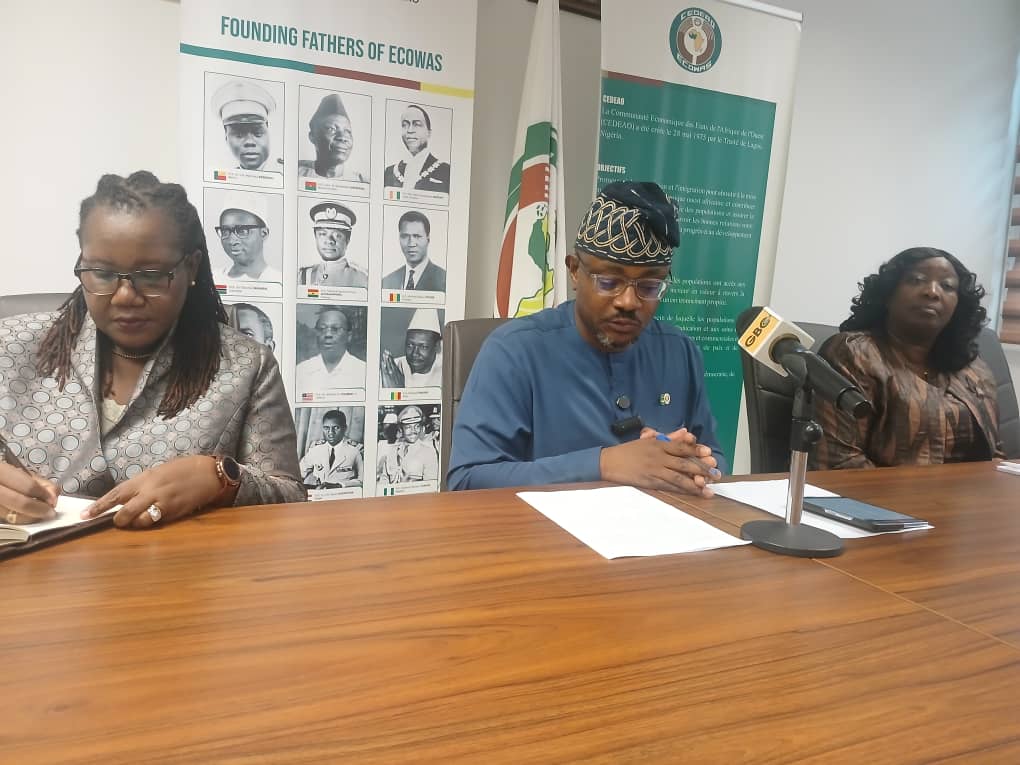
Speaking at a pre-media engagement in Accra ahead of a technical meeting scheduled for Wednesday, November 19, ECOWAP/CAADP Monitoring & Evaluation Programme Officer at the Directorate of Agriculture and Rural Development, Mrs Fatmata Lucia Seiwoh, said the committee will support coordination of fisheries and aquaculture interventions across member states.
She said the committee will be expected to implement an annual workplan aimed at streamlining development in the sector.
According to her, the region experienced a fall in fisheries stocks in 2024, a situation she believes can be addressed through a well-coordinated management approach.
“There had been series of engagements and interventions to come out with a clear policy or strategy on fisheries in the region,” Mrs Seiwoh said.
All these efforts, she noted, were geared towards ensuring sustainable fisheries and aquaculture development in the region.
She also disclosed that a technical meeting on agricultural data management will be held to assess the status of the region’s data systems.
She said data is critical for sector planning and noted that a previously established ECOWAS agricultural information system supported by the European Union had faced operational challenges.
“We are going to revitalise the Agriculture Information System,” Mrs Seiwoh said, adding “We are bringing the stakeholders from the countries to see the status of the progress.”
Trade and regional integration focus
The media engagement also highlighted broader ECOWAS initiatives aimed at accelerating regional integration and trade.
Director of Trade at the ECOWAS Commission, Kolawole A. Sofola, said the high-level events beginning Wednesday demonstrate “our commitment to deepening regional integration, boosting productive capacity, and strengthening economic resilience across West Africa.”
He said the gatherings will bring together experts, national institutions, the private sector and development partners to address key issues in trade, agriculture, fisheries, standards and cross-border cooperation.
For him, the initiatives will reinforce ECOWAS’ commitment to “boosting trade and agricultural transformation, enhancing regional food security; strengthening governance in key productive sectors, and also ensuring safe, competitive, and high-quality products across borders.”
Sofola said the Commission is advancing its regional economic integration agenda in line with ECOWAS Vision 2050 — “A community of peoples fully integrated in a peaceful region, prosperous with strong institutions and respectful of fundamental freedoms and working for inclusive and sustainable development.”
He said ECOWAS is evolving from an “ECOWAS of States” to an “ECOWAS of the People,” noting, “Over the past 50 years, we have made significant progress in promoting free trade and free movement, which remain the foundation of a peaceful, prosperous, and interconnected West Africa.”
Touching on trade progress under the ECOWAS Trade Liberalisation Scheme (ETLS), Sofola said thousands of products are now circulating freely within the region, reducing trade barriers and supporting private sector growth.
He noted that “ECOWAS has strengthened customs cooperation, expanded the use of regional transit documents, and enhanced the operationalisation of Joint Border Posts to enable smoother and faster movement of goods and people.”
He added that progress continues under the ECOWAS Protocol on Free Movement of Persons, Residence, and Establishment, supported by biometric ECOWAS travel documents and improved coordination among border agencies.